
About Scott Sandberg
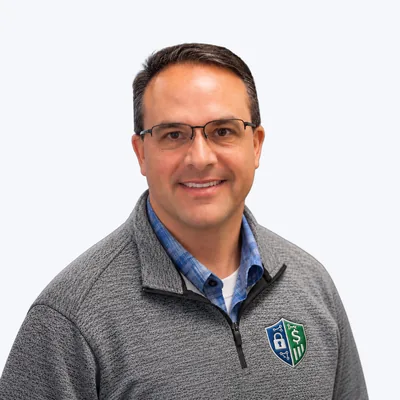
A Little About Me
I am Scott Sandberg, a former software engineer and information technology professional turned educator, with nearly 30 years of experience spanning technology, education, and leadership.
My career began in the technology industry, working with software engineering, enterprise systems, networking, and information security. I eventually traded the corporate world for the classroom, where I discovered something I enjoy just as much as solving technical problems: helping people understand how things work.
Over the past two decades, I have taught everything from history and computer science to cybersecurity, artificial intelligence, engineering, and personal finance. Along the way, I have also served as a school administrator, Career and Technical Education (CTE) Director, and instructional leader.
Today, I am back in the classroom, where my passion has always been: working directly with students, sparking curiosity, and helping them connect what they learn to the world around them. While I have enjoyed opportunities to lead programs and support educators, nothing quite compares to those moments when a student finally understands something that once seemed impossible.
I also serve as a national Project Lead The Way Master Teacher, helping educators across the country bring computer science and cybersecurity into their classrooms. My work has included developing curriculum, building educational programs, and participating in statewide and national conversations about the future of computer science education.
For the past two years, I have taught artificial intelligence using curriculum I wrote for my own classroom, and I have been using these tools since AI first became public. I helped draft the Washington State Artificial Intelligence framework for Project Lead The Way, and I have spoken about AI in education.
My interest in personal finance is personal. About 27 years ago, I started working my way out of debt. It got me out of debt, but it didn't change my habits, at least not right away. That came during what I call "car-mageddon," when three of our four family vehicles needed engine or transmission repairs at the same time. My wife and I looked at each other and said, "We make too much money for this." That was the turning point.
I have taught personal finance for 15 years, and I am honest with my students about my own journey: what worked, what didn't, and why behavior matters as much as the math. A class that started with 14 students now regularly enrolls more than 100, nearly half of our graduating class. I advocate at the state and national level for personal finance, because life doesn't treat money as optional, and neither should school.
Along the way, I have worked with students who have competed nationally in cybersecurity, coding, technology, and personal finance competitions.
But one of the most important things I have learned has nothing to do with technology.
People are expected to know things they were never taught.
I tell my classes this all the time: we live in a world none of us truly understands, yet we are expected to navigate it like experts.
That realization is what led me to create CyberSandberg.
Why Cybersecurity, Personal Finance, and AI?
For years, I have taught students about cybersecurity, personal finance, and technology. Along the way, adults have asked me a question that has stuck with me:
“Do you teach adults, too?”
It is a fair question.
Think about everything we expect people to understand. How credit works. Why interest rates matter. How to invest for retirement. What makes an email suspicious. How to protect their identity. And now, how artificial intelligence is changing the way we work, communicate, and make decisions.
These are no longer specialized subjects reserved for financial professionals or technology experts. They are everyday life skills.
Yet many people never receive meaningful instruction in any of them.
I have also come to recognize how closely these three subjects are connected.
You can spend years saving money, building credit, and planning for retirement, only to have a convincing scam, compromised account, or stolen identity threaten what you have worked so hard to build.
Meanwhile, artificial intelligence is changing nearly every aspect of our lives. It is creating opportunities to learn, work more efficiently, and solve problems. But it is also changing how scams work, how our information is collected and used, and how financial decisions are influenced.
Understanding AI is becoming just as important as understanding the technology and financial systems we rely on.
Cybersecurity helps you protect what you have. Personal finance helps you build your future. Artificial intelligence is changing how we do both.
That is the idea behind CyberSandberg.
I wanted to create a place where anyone, regardless of age, education, or technical experience, could find useful information about cybersecurity, personal finance, and artificial intelligence without needing a degree, a textbook, or a dictionary of technical terms.
Learning Should Not End in the Classroom
One of the things I enjoy most about teaching is watching a conversation turn into understanding.
Sometimes all it takes is a good question.
That is the inspiration behind Teach It This Week, a collection of short discussions built around real-world cybersecurity, personal finance, and artificial intelligence topics.
These are conversations you can have around the dinner table, with friends, at work, or in a classroom.
Teachers are welcome to use them, but you do not need to be a teacher to share something worth learning.
Imagine discussing whether you could recognize an AI-generated voice pretending to be a family member. Or talking about how much money someone could save by understanding credit card interest. Maybe the conversation is about protecting your accounts, recognizing a scam, or deciding whether information generated by AI is trustworthy.
My hope is that a 10-minute conversation might help someone avoid a costly mistake, recognize an opportunity, or make a better decision.
What You Will Find Here
CyberSandberg focuses on three subjects that increasingly influence our everyday lives.
Cybersecurity
Understanding how to protect yourself, your family, and your information in a connected world.
From scams and data breaches to identity theft, account security, and online privacy, the goal is to help you recognize risks and take practical steps to protect yourself.
Personal Finance
Understanding how money works and developing the habits to make better financial decisions.
From budgeting, credit, and debt to saving, investing, and retirement planning, the goal is to help you build financial knowledge and confidence.
Because financial success is not just about understanding the numbers. It is also about the decisions and habits behind them.
Artificial Intelligence
Understanding a technology that is rapidly changing how we live, work, learn, and make decisions.
AI is no longer something happening in the distant future. It is already influencing the information we consume, the products we use, the jobs we perform, and the decisions we make.
We will explore what AI can do, where it falls short, how to use it effectively, and how to recognize its risks.
The goal is not to turn everyone into an AI expert. It is to help you understand enough to use these tools responsibly, question their results, and recognize how they affect your everyday life.
Where It All Comes Together
While cybersecurity, personal finance, and artificial intelligence each deserve attention on their own, their connections are becoming increasingly important.
A compromised email account can put your financial information at risk.
An AI-generated voice can make a financial scam more convincing.
An AI-powered financial tool can help you evaluate options, but it can also provide inaccurate or misleading information.
Understanding these connections helps you make better decisions and recognize risks you might otherwise overlook.
That is what CyberSandberg is about.
I am not here to sell you a financial product, promise you wealth, or convince you that every new technology is dangerous.
I am here to share what I have learned, explain what matters, and hopefully help you make more informed decisions.
Because I believe something simple:
You should not have to be a student to have access to a good teacher.
Welcome to CyberSandberg.
Protect what you have. Understand what you are building. Keep learning.
What we promise
- Every claim about a company is factual and links to a source: the company's own notice or help page, a regulator, a court record or a public filing.
- We never publish leaked data or attack details, only what happened and what to do.
- We fix mistakes quickly and openly on our corrections page.
- We are independent. We are not affiliated with, endorsed by or sponsored by any bank, brokerage, retirement plan provider, curriculum publisher or government agency.
Contact
Email [email protected]. Companies we write about can use the same address to send corrections or a response.
Follow
Find CyberSandberg on these platforms. Each link opens in a new tab.